Cold Plunge Benefits: Your Top Questions, Answered
Cold water immersion may support workout recovery, alertness, and stress regulation. Here’s what the research supports, where evidence is still developing, and how to find the right dose for you.
Medically reviewed by Dr. Amy Price Neff, founder of Mindstream Integrative Medicine and medical advisor to Framework. Post updated August 31, 2026.
Cold plunging can be useful for recovery, alertness and practicing calm under pressure. But the benefits depend on the person, the purpose, and the practice.
Research most consistently supports cold water immersion as a short-term recovery tool, especially for reducing muscle soreness after demanding exercise. Cold also creates an immediate stress response that increases alertness and challenges you to regulate your breathing. Other potential benefits, including metabolic and immune effects, are still being studied.
The goal isn’t to withstand the coldest water possible. It’s to find a temperature and duration you can approach consistently, safely and with control.
Here’s what current evidence tells us.
What are the most established benefits of cold plunging?
It can reduce soreness after strenuous exercise.
This is where the research is strongest. Cold water immersion constricts blood vessels and lowers tissue temperature, which can help reduce perceived soreness after intense activity. A 2026 systematic review and meta-analysis of 30 randomized trials found that cold water immersion reduced markers of muscle damage and delayed-onset muscle soreness compared with passive rest. Earlier reviews have reached similar conclusions, particularly after high-intensity exercise. That makes cold a useful recovery option after a race, tournament or especially demanding workout.
It creates an immediate lift in alertness.
Cold water rapidly activates the sympathetic nervous system. Breathing and blood pressure can rise rapidly, while heart-rate responses vary with the temperature, immersion method and individual. Cold exposure also increases noradrenaline, a neurotransmitter involved in attention and arousal. One frequently cited study found large increases in noradrenaline and dopamine during an hour-long immersion in 57°F water. That helps explain the clear, energized feeling many people notice after a plunge. The context matters: that study used a longer exposure than a typical Framework session, so its exact percentages shouldn’t be treated as a promise of what every brief plunge will produce. The more reliable takeaway is that cold creates a measurable alerting response.
It gives you a place to practice nervous system regulation.
The first moments of a plunge can feel like an alarm: faster breathing, muscle tension and an urge to get out. Slowing the exhale and relaxing against that response can help you regain a sense of control. With repetition, the experience often becomes more manageable. The cold is still cold, but your response to it can change. That is the practice: meeting a controlled stressor without letting it take over. While the research on long-term psychological resilience is still developing, what we can say is that cold provides immediate, repeatable feedback on how your body responds to stress.
Can cold plunging improve mood?
Cold can create an immediate lift in energy, focus, and drive—and dopamine may help explain why. In one frequently cited study, an hour-long immersion in 57°F water produced a 250% increase in dopamine and a 530% increase in noradrenaline, two neurotransmitters involved in motivation, attention, and arousal. Some studies and participant reports also point to improvements in well-being, sleep or quality of life. Cold plunge should be one part of a routine that supports how you feel—not a stand-alone treatment for depression, anxiety, or another mental health condition.
Does cold exposure support metabolism?
Cold activates the systems your body uses to produce heat, including brown adipose tissue, sometimes called brown fat. Unlike white fat, brown fat uses energy to help maintain body temperature. Small human studies have linked cold-activated brown fat with glucose uptake and improved insulin response. While cold clearly activates thermogenesis, its long-term metabolic effects depend on the type of exposure, the individual and the outcome being measured.
Does cold plunging strengthen the immune system?
Cold exposure can change stress hormones, inflammatory markers, and some immune activity. But a temporary biological response is not the same as proven protection against illness. The current evidence is mixed; A recent systematic review found no significant immediate improvement in immune function, although some longer-term studies have reported fewer sickness absences or changes in inflammatory markers. More high-quality research is needed before cold plunging can reasonably be described as an immune booster.
How is cold plunging different from an ice pack or cryotherapy?
All three use cold, but they expose the body in different ways. An ice pack or cold-compression device acts locally. It can reduce pain or swelling in a specific area after an acute injury. Whole-body cryotherapy surrounds the body with extremely cold air for a short period. Cold plunging uses water, which draws heat from the body more efficiently than air and creates a deeper thermal response. In a direct comparison, cold water immersion produced greater reductions in muscle temperature and limb blood flow than whole-body cryotherapy. Another study found that cold water immersion may be more effective than whole-body cryotherapy for soreness, perceived recovery, and some measures of exercise performance.
What temperature should a beginner choose?
Start with the warmest temperature that produces a clear cold response without sending you into panic. At Framework, cold plunges range from approximately 40–60°F. For many first-timers, 55–60°F is enough. You should notice an involuntary change in your breathing, then be able to settle it within the first minute.
You do not need the coldest tub to receive a benefit. As the temperature drops, the exposure should generally become shorter.
A useful beginner approach:
Start around 55–60°F.
Stay for 30 seconds to two minutes.
Keep your shoulders relaxed.
Breathe in steadily and make the exhale longer.
Step out while you still feel in control.
Let your body warm gradually.
Consistency is more useful than turning every session into a test.
How often should you cold plunge?
There is no universally established weekly prescription, but Dr. Susanna Søberg’s research offers a useful benchmark: roughly 11 total minutes of cold water immersion per week, divided across two or three days. That figure reflects the weekly practice observed in a small study of experienced winter swimmers who also regularly used sauna.
If you’re new to cold exposure, start with one or two sessions per week and build gradually. Change one variable at a time. If you go colder, go shorter. If you stay longer, choose a more moderate temperature. Eleven minutes is a weekly total, not a single-session challenge.
Should you plunge immediately after a workout?
It depends on what you want from the workout. Cold water immersion can be useful when short-term recovery is the priority, such as after a race, competition or high-intensity training session. Research suggests it may reduce soreness and improve perceived recovery over the following day. If muscle growth is your primary goal, consider separating it from strength training by several hours or saving it for cardio, recovery and non-lifting days.
Who should take extra precautions?
Talk with a qualified clinician before plunging if you:
Have cardiovascular disease, uncontrolled high blood pressure, or a history of stroke
Are pregnant
Experience severe Raynaud’s or another cold-sensitive condition
Have asthma triggered by cold
Live with POTS, dysautonomia or a history of fainting
Have another condition that may affect circulation, breathing, or temperature regulation
Skip cold exposure when you are sick, severely fatigued, intoxicated or unable to safely regulate your breathing. Never plunge alone in an uncontrolled setting. This article is general education, not individual medical advice.
Why practice cold exposure at Framework?
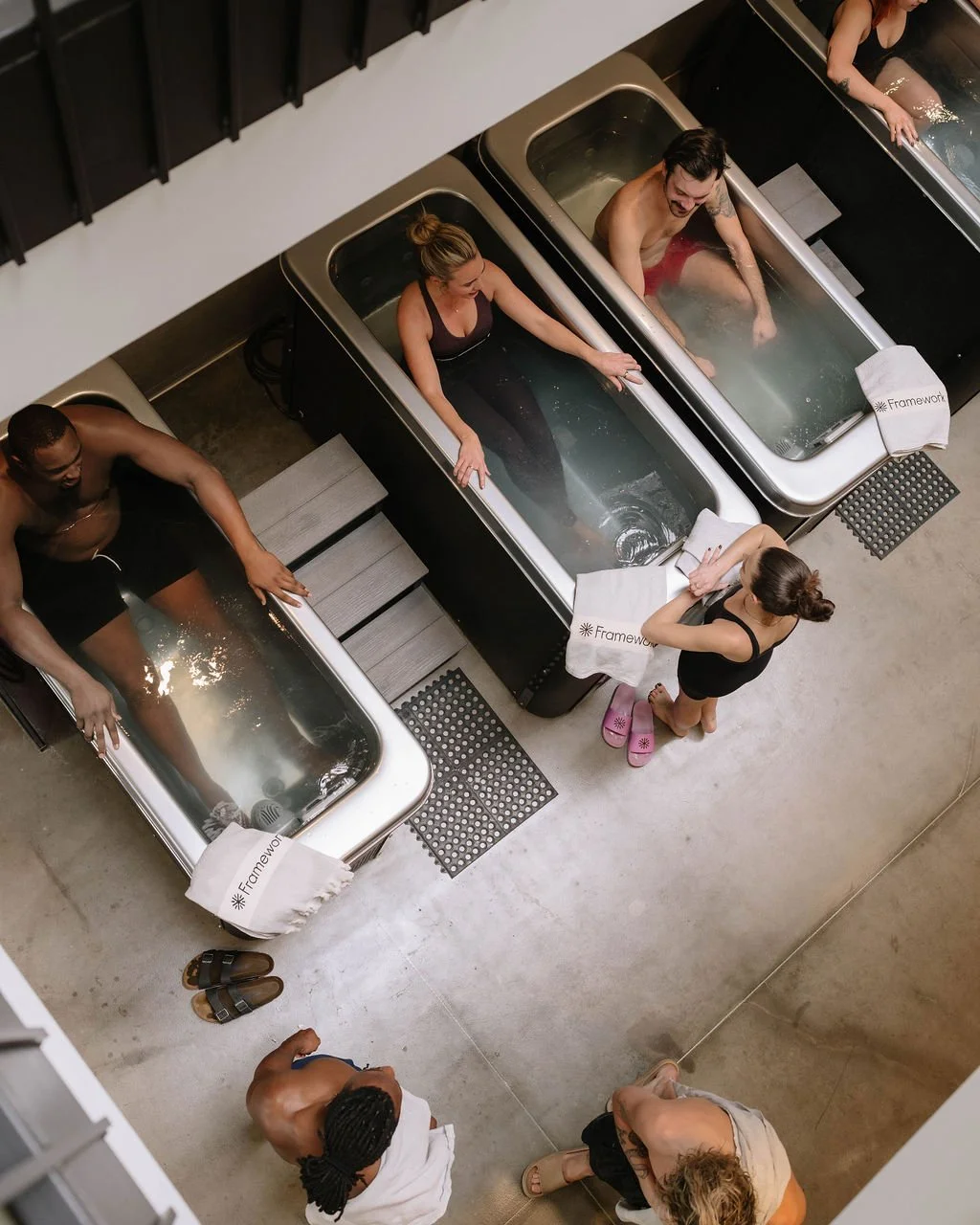
Cold is easier to approach when you’re in good company. Framework offers guided sessions, private rooms, and multiple plunge temperatures between approximately 40–60°F, allowing you to start warmer and progress gradually. Temperatures are posted, and our team can help you think through breathing, pacing, and recovery based on how you feel that day. You can also take the practice outside. Framework’s Flagship includes an active outdoor patio, while the Backyard is fully open-air. That means a session can include natural light, fresh air, and gradual temperature shifts alongside the more concentrated contrast of sauna and cold plunge. As we explore in A Case for Indulging in the Elements, outdoor time provides its own regulatory cues for circadian rhythm, mood, and nervous system health.
Cold is only one half of the Framework practice. Traditional sauna creates sustained heat, increased circulation, and space to settle. Moving between hot, cold, open air, and rest lets you work with the full range of contrast. You can explore the research behind both practices on The Science.
The bottom line
Cold plunging is best supported as a tool for short-term workout recovery, alertness and practicing control during an acute stress response. Its metabolic, immune and longer-term mental health effects are promising areas of research.
Start warmer. Stay shorter. Breathe slowly. Build from there.
Ready to find your temperature?
Book a session and explore cold plunge and traditional sauna at Framework’s Wedgewood-Houston Flagship or East Nashville Backyard.